Stellenbosch · Est. 2026 · NPC Reg. 2026/068067/08
Stewards of the Commons
Enter the CommonsThe Mandate
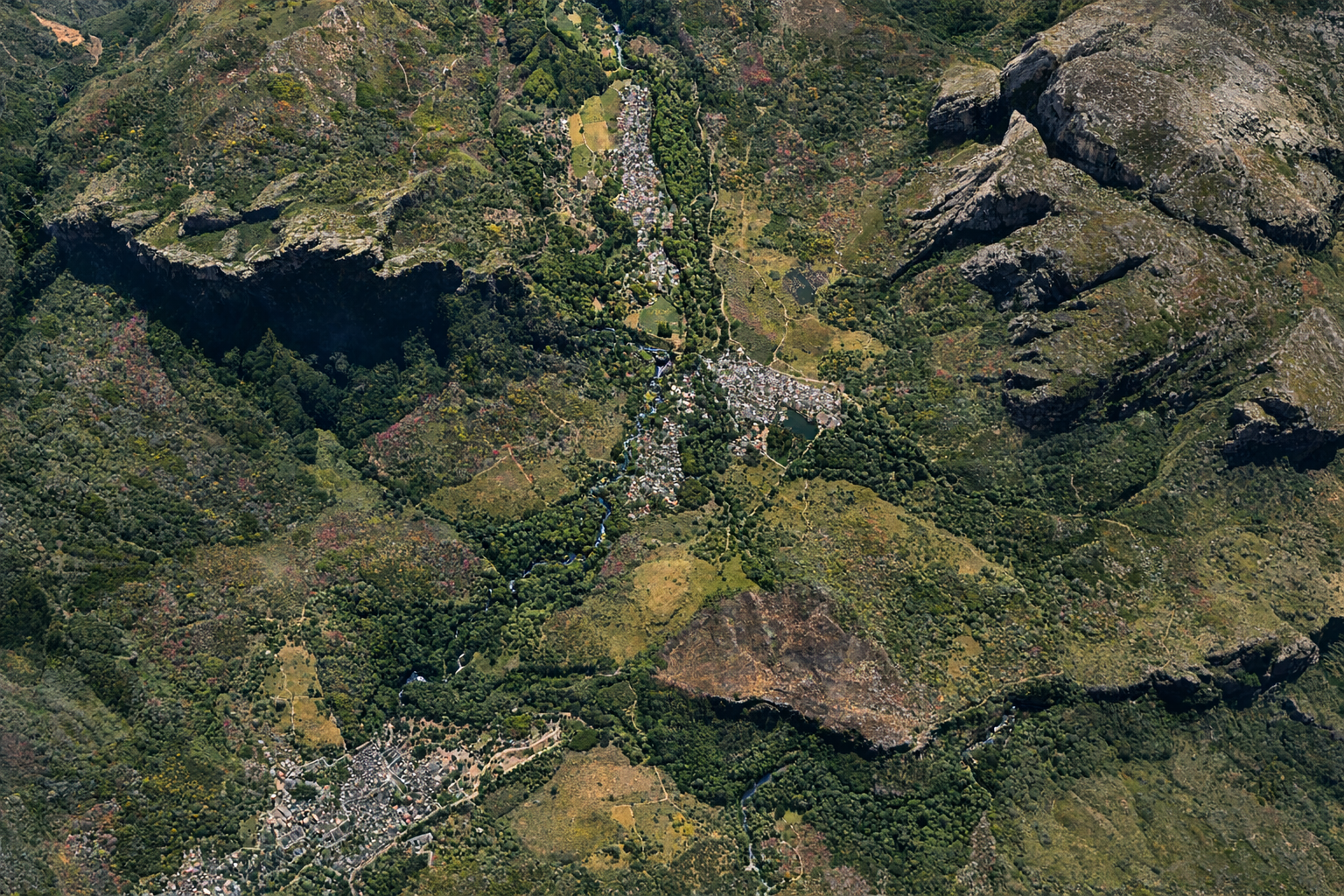
The Stella Polare Institute is the institutional response to the custodianship vacuum across the Idas Valley Corridor.
A historically unified ecological and infrastructural system has become fragmented, leaving critical water, land and heritage assets without responsible governance. We are establishing a permanent institutional endowment to restore and govern this corridor as a single, connected ecological system.
This mandate establishes continuous governance for the Idas Valley Corridor, formally designated a Grade I Heritage Site, treating the landscape as a unified system from the Simonsberg headwaters through the historical Helshoogte passage to the valley floor.
Continuity is not preserved by intention, but through structure.
The Bones
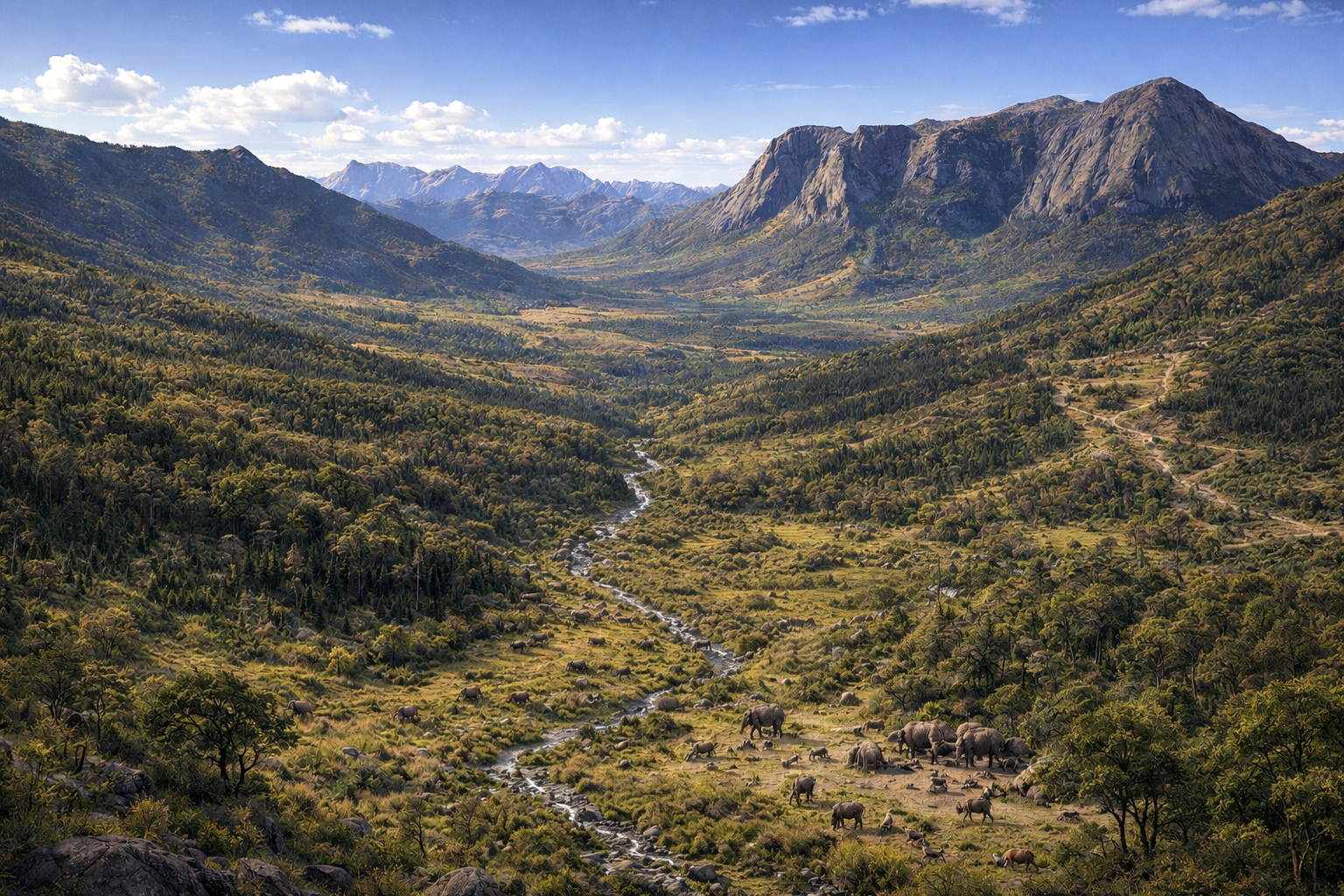
This landscape is a trans-temporal corridor defined across deep time. Pleistocene-era stone tools and ancient migratory paths establish the earliest structure of passage through the Idas Valley Corridor, routes shaped by gradient, water, and terrain, not by design.
These pathways were followed by pastoralist movement in the 6th century and later, under colonial expansion in the 17th, became a staging ground at Nazareth Farm, in Lower Idas Valley, for the difficult journey over (De Hell) constrained by traction, load, and exposure to an untamed landscape toward descent into (De Bangehoek) banhoek, and arrival at Bethlehem. This climb which became, Old Helshoogte Road, a crucial arteries for agricultural expansion. In the late 19th century, John X. Merriman directed the agricultural reconfiguration of the Cape from within this valley diseased vineyards removed, resistant rootstock planted, the alluvial lands transformed into orchard systems.
These layers did not replace one another. They accumulated. The corridor persists as a continuous system in which movement, water, and production remain aligned to the same underlying conditions.
La terra non mente. — The earth does not lie.
The Arteries
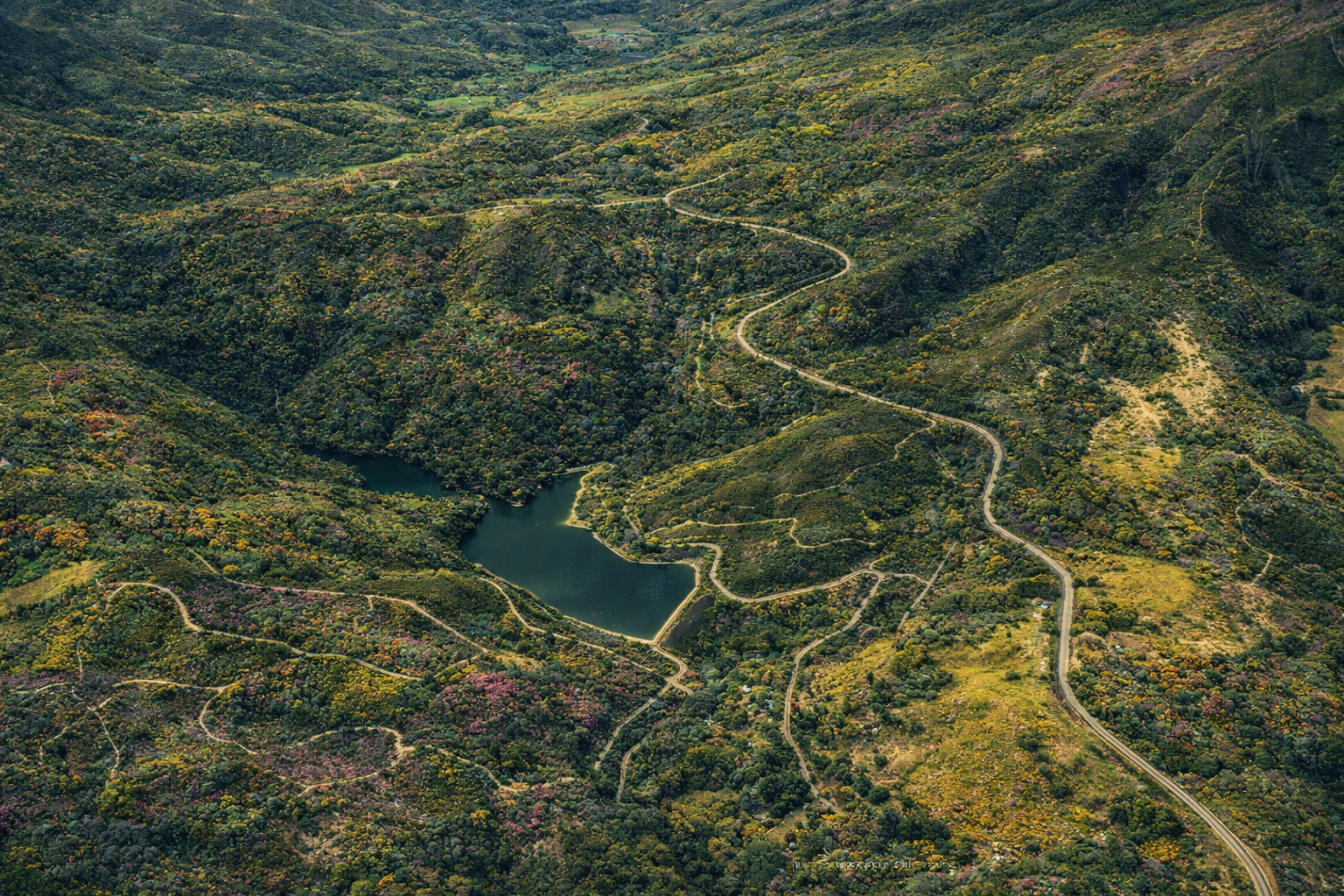
From the 1700s through the mid-20th century, this geography functioned as a strategic corridor for transit and water security. The completion of the Idas Valley Dams in the 1930s secured Stellenbosch's seasonal water continuity with storage volume four times larger than the Jonkershoeks Kleinplaas dam establishing absolute water independence for the town.
The 1980s brought a decisive shift. The commissioning of the Paradys Kloof water plant and the completion of the R310 New Helshoogte Bypass stripped the corridor of its transit pulse and localised autonomy. What had been a vibrant regional gateway became a quiet cul-de-sac almost overnight. The corridor's trans-temporal function was rendered inert.
La struttura determina il flusso. — Structure determines flow.
The Lifeblood
The conversion of the corridor into a cul-de-sac triggered spatial separation. The Idas Valley community was psychologically and physically distanced from the town's pulse, allowing a custodianship vacuum to settle over the neglected landscape.
In this silence, a slow biological takeover occurred. Ancient Boland Granite Renosterveld was suppressed by Eucalyptus, which grew into dense forests pressing against the valley's limits. This clotting of the system, a cycle of invasive regeneration has led to the collapse of the Kromme River. The corridor's lifeblood is being choked by an alien monoculture that now fuels high-intensity fire risk.
Sporadic interventions clear visible biomass but leave biological root systems intact. The system resets. Recurrence is not incidental, it is structurally embedded in every intervention designed without the goal of closure.
La negligenza costruisce rovina. — Neglect builds ruin.
The Inheritance
We do not interpret the valley as a collection of degraded assets. We hold it as a Patrimonio — a continuous cultural and biological inheritance formed through layered systems of movement, water, and production across deep time.
What persists is not condition but structure. Our mandate is to restore that structure through responsible governance, embedding continuous systems intelligence into decision-making, and re-establishing continuity between intervention and ecological recovery cycles.
We operate as the Systems Architects of the corridor: realigning fragmented institutions, restoring coherence, and enabling the ancestral lifeblood of the valley to flow once more.
This is a self-imposed duty of Tutela, guardianship anchored in the conviction that the natural commons belong to the future, not to the transient interests of the present.
L'eredità è un'azione. — Inheritance is an action.
Anchor Contributions
The Stella Polare Institute is structured to convert capital into permanent institutional form, aligning financial systems with ecological recovery cycles across intergenerational time horizons.
Contributions do not fund projects. They capitalise a Locked Principal Endowment. The principal remains intact. Only the yield is deployed, securing continuous stewardship, operational stability, and century-scale system recovery.
This is not a campaign. It is the construction of a permanent capital base.
Execute Contribution